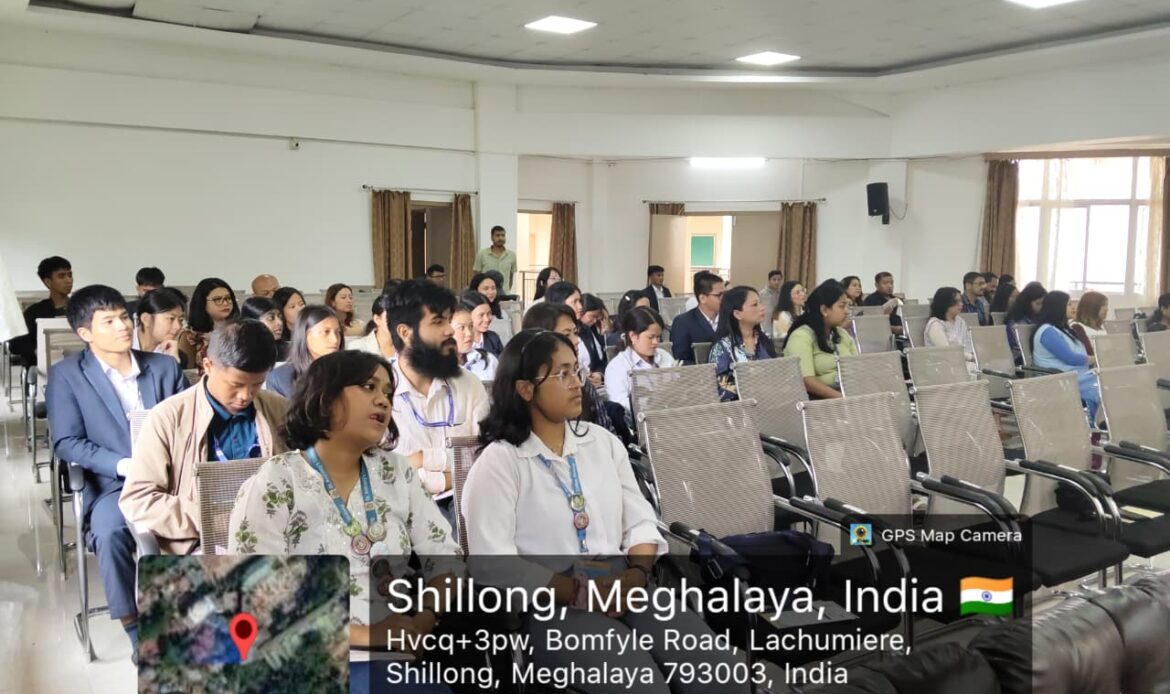

Shillong 17 July: The Department of Value Education, along with the IKS Cell of St. Anthony’s College, Shillong, organized a One-Day National Workshop on Contextualising Indian Knowledge Systems and Indian Value Systems for a Holistic and Value-Based Higher Education on 16 July 2026. The workshop was financially sponsored by the Indian Council of Social Science Research (ICSSR), North Eastern Regional Centre, Central Bank of India, St. Anthony’s Branch and technically supported by DBHEI (Don Bosco Higher Education India). More than 80 participants, comprising faculty members, researchers, and students from various colleges participated in the workshop.
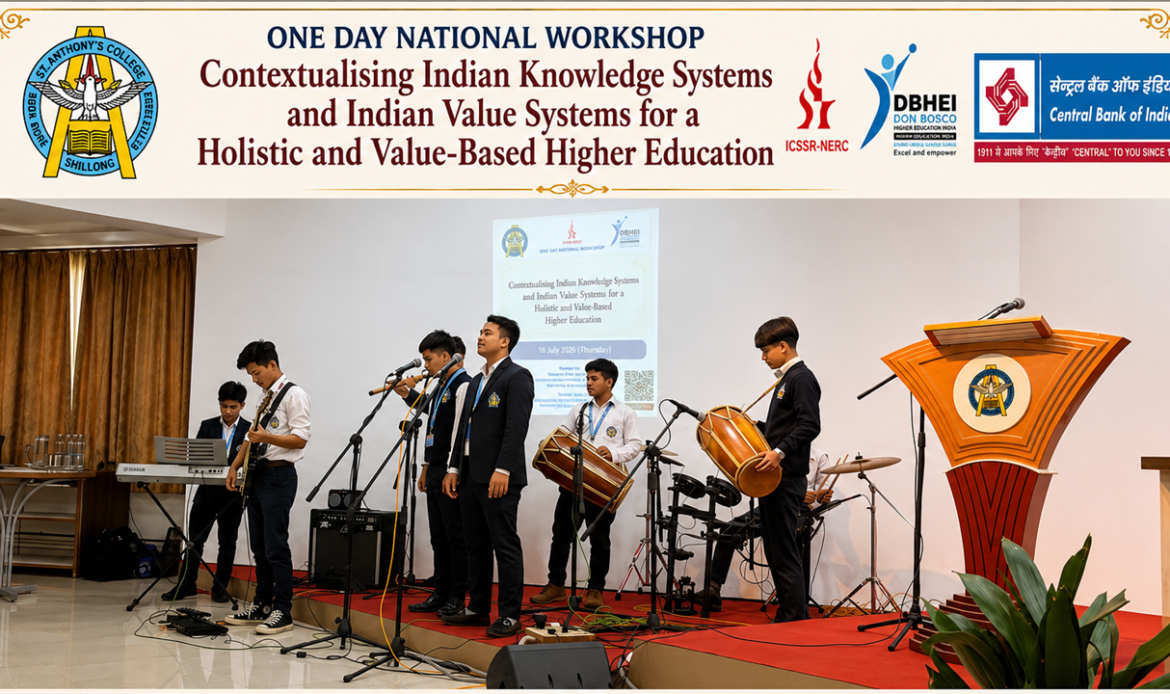
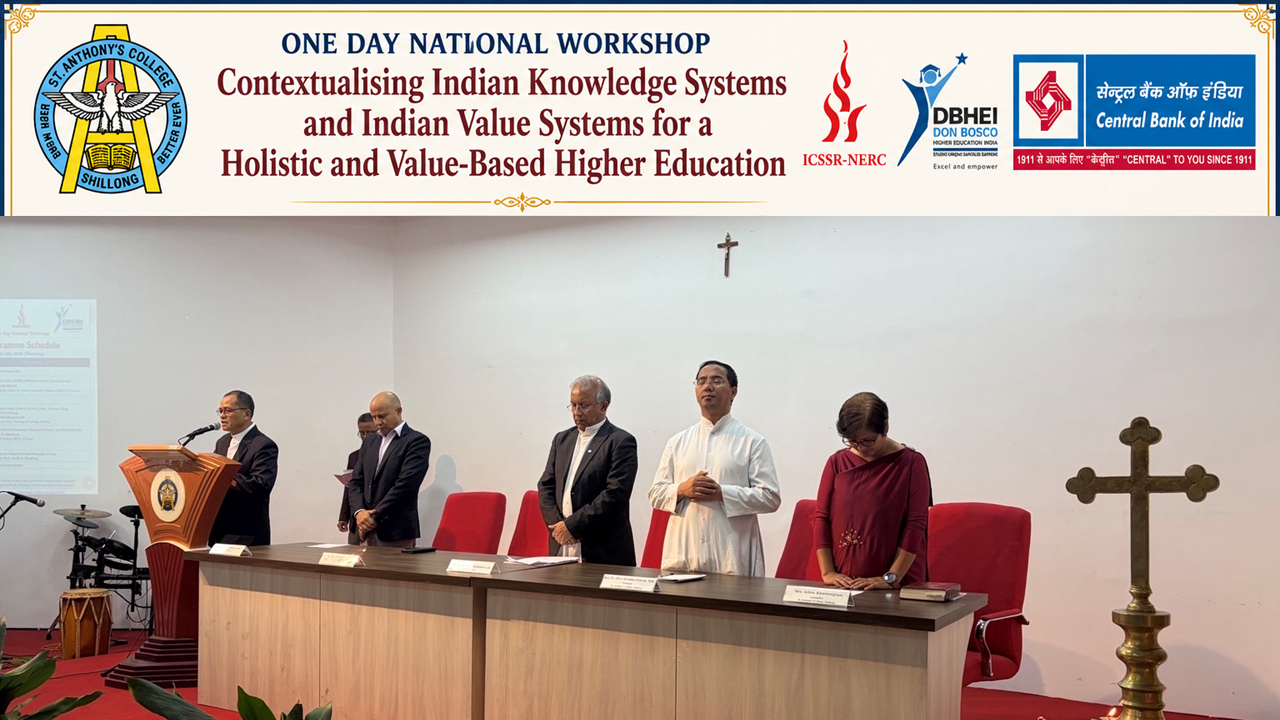
The workshop commenced by invoking the Divine in prayer, followed by a melodious welcome song- a fusion presented by the students of the music department. The inaugural session was graced by the Principal, Fr. Arcadius Puwein sdb, PhD, Fr. Ioannis Warpakma sdb PhD, the Rector, Fr. Joby Joseph sdb, PhD, Vice Principal and Head, Dept. of Value Education and other dignitaries.
The first session was led by Dr. Fr. Jose Chunkapura sdb, PhD, former President, Sacred Heart Theological College, Shillong, on the theme “Indian Value Systems: Dharma, Seva, Harmony, Duty, Ecology, and Ethical Living.” Drawing from Indian philosophical traditions and Christian educational values, he emphasized that education should shape not only competent professionals, but also responsible citizens committed to service, harmony, environmental stewardship, and ethical living. His presentation encouraged participants to appreciate the convergence between Indian value traditions and universal human values of unity, justice and care.
The keynote session was delivered by Prof. T. Venkata Bhārat, Associated Faculty, Centre for Indian Knowledge Systems (CIKS), IIT Guwahati. Speaking on “What is Indian Knowledge Systems and Why It Matters in Higher Education Today?”, he provided a comprehensive introduction to the philosophy, scope, and significance of IKS. He illustrated how India’s rich intellectual traditions in science, mathematics, medicine, governance, philosophy, and education continue to offer valuable insights for addressing contemporary educational challenges. He encouraged educators to adopt interdisciplinary approaches that integrate indigenous knowledge with modern pedagogical practices.
The third session was presented by Prof. Cecile A. Mawlong, Department of History, North-Eastern Hill University (NEHU), Shillong, on “Traditional Knowledge, Indigenous Wisdom, and North East India.” She highlighted the wealth of indigenous knowledge embedded in the cultural traditions of Northeast India, including sustainable environmental practices, community governance, oral histories, and local ecological wisdom. She stressed the importance of documenting, preserving, and integrating indigenous knowledge into higher education curricula to foster culturally rooted and context-sensitive learning.
The workshop concluded with an interactive discussion, during which participants reflected on practical ways of integrating IKS and Indian Value Systems into teaching, learning and institutional practices. This session was coordinated by Fr. Joby Joseph sdb, PhD. This followed the valedictory function where Fr. Ioannis was the Chief Guest and distributed certificates of participation to all.
Reported by Fr. Joby Joseph sdb